Address
304 North Cardinal St.
Dorchester Center, MA 02124
Work Hours
Monday to Friday: 7AM - 7PM
Weekend: 10AM - 5PM

Address
304 North Cardinal St.
Dorchester Center, MA 02124
Work Hours
Monday to Friday: 7AM - 7PM
Weekend: 10AM - 5PM
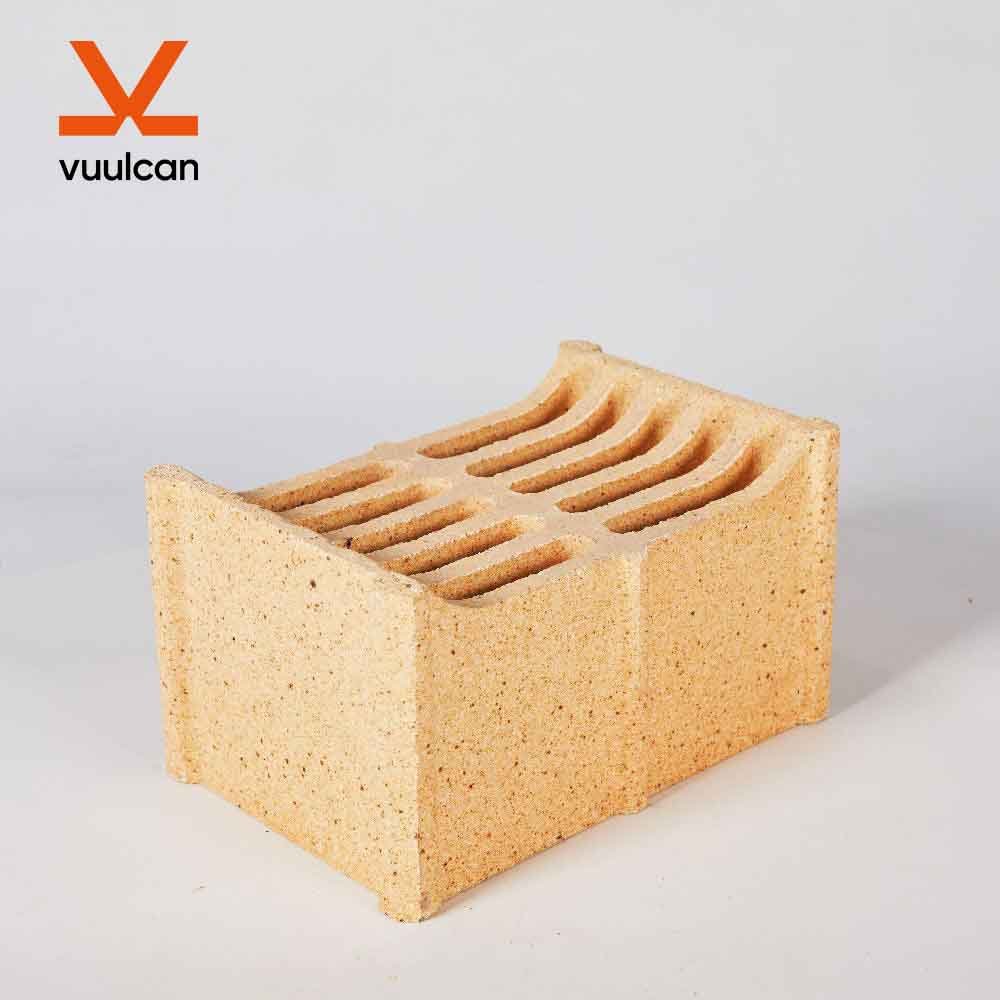
The main raw materials of refractory clay bricks are refractory clay and kaolin. Their chemical composition typically includes Al₂O₃ (30% – 40% by mass), SiO₂ (50% – 65% by mass), and small amounts of various metal oxides. Refractory clay bricks are weakly acidic refractory materials, with a load-softening point of approximately 1350°C. They have a low coefficient of thermal expansion, moderate thermal conductivity, good specific heat capacity and excellent thermal shock resistance. The maximum operating temperature is usually 1300-1400°C
Coke oven: used for doors, roofs and flues (non-critical components); It has poor resistance to alkali residue, but it is cost-effective.
Heating furnace: bottom and walls of the medium and low-temperature zone (e.g., average heating section).
Annealing furnace: lining and checkerboard bricks.
Rotary kiln preheater: Lining of cyclone separator and decomposer (resistant to slag rich in SiO₂).
Cooler: Square bricks used in low-temperature areas that require high thermal shock resistance.
Regenerative chamber: Square bricks resistant to acidic high-temperature gases (need to be replaced regularly).
Melted part of the chest wall: Suitable for areas that do not come into direct contact with molten glass.
Tunnel kiln: Kiln car deck and wall lining (resistant to erosion by volatile components).
Shuttle kiln: Used for fireplaces and flues.
| Item | Specification | ||
| PN-42 | PN-40 | PN-35 | |
| Al2O3 % | ≥42 | ≥40 | ≥35 |
| Fe2O3 % | ≤2.0 | ≤2.0 | ≤2.5 |
| Apparent Porosity % | ≤20 | ≤24 | ≤26 |
| Bulk Density g/cm3 | 2.1~2.25 | 2.05~2.2 | 1.95~2.1 |
| CCS MPa | ≥45 | ≥35 | ≥30 |
| 0.2MPa RUL℃ | ≥1400 | ≥1350 | ≥1320 |
| PLC % | -0.4~0.11400℃×2h | -0.4~0.11350℃×2h | -0.4~0.11300℃×2h |