Address
304 North Cardinal St.
Dorchester Center, MA 02124
Work Hours
Monday to Friday: 7AM - 7PM
Weekend: 10AM - 5PM

Address
304 North Cardinal St.
Dorchester Center, MA 02124
Work Hours
Monday to Friday: 7AM - 7PM
Weekend: 10AM - 5PM
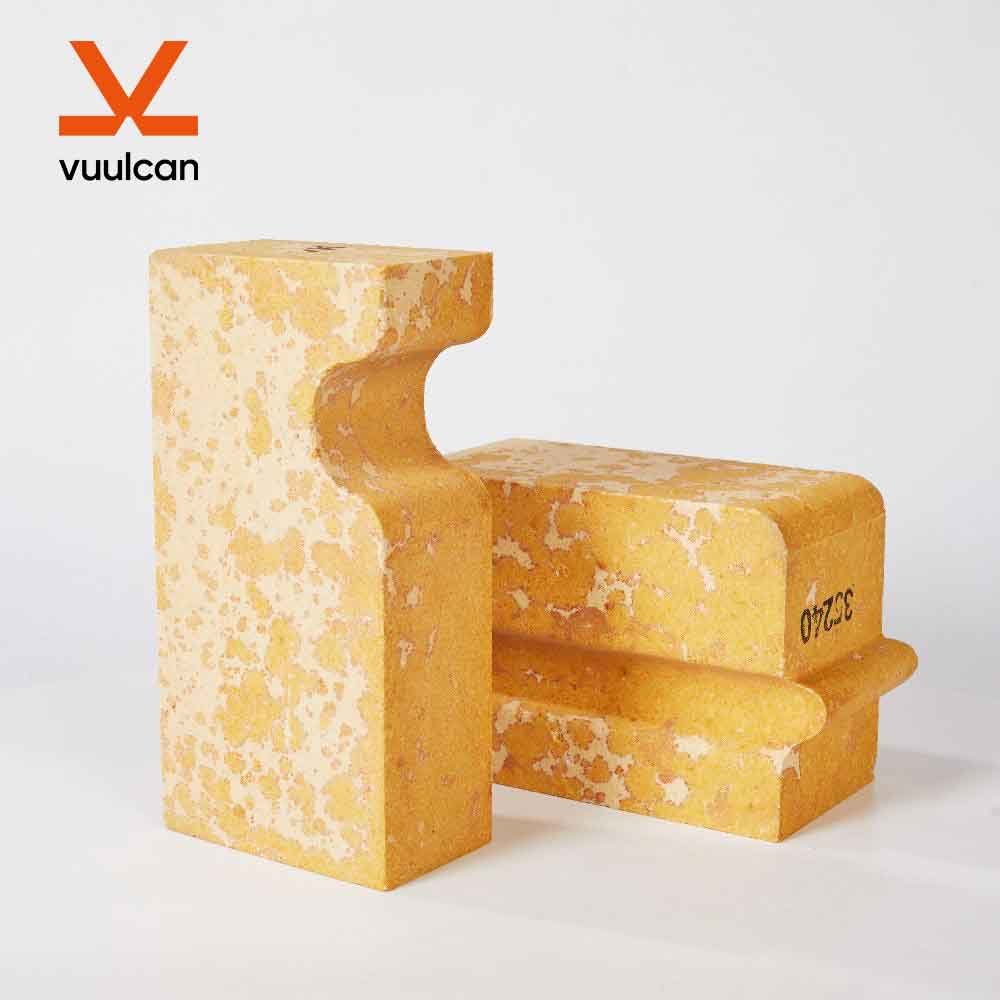
Silica brick is an acidic refractory material with a silica content of over 94% and a true density of 2.38g/cm ³. They feature resistance to acidic slag erosion, high high-temperature strength, and an initial softening temperature under load of 1620-1670°C. It will not deform after long-term use at high temperatures. Crystal transformation generally does not occur above 600°C, with a small coefficient of thermal expansion and high thermal shock resistance.
Silica bricks are mainly used for the partition walls of the carbonization chamber and combustion chamber of coke ovens, the regenerative chamber and slag chamber of steelmaking open-hearth furnaces, soaking furnaces, glass melting furnaces and ceramic firing kilns. They are also used for the high-temperature load-bearing components of hot blast stoves and the tops of acidic open-hearth furnaces.
| Item | Specification | ||||
| BG-96A | BG-96B | BG-95 | JG-94 | GZ-94 | |
| SiO2 % | ≥96 | ≥96 | ≥95 | ≥94.5 | ≥94 |
| Fe2O3 % | ≤0.6 | ≤0.8 | ≤1.0 | ≤1.2 | ≤1.4 |
| Melt Index, % | ≤0.5 | ≤0.7 | / | / | / |
| Apparent Porosity, % | ≤21 | ≤22 | ≤22 | ≤22 | ≤24 |
| True Density, g/cm3 | ≤2.34 | ≤2.33 | ≤2.35 | ||
| CCS, MPa | ≥40 | ≥35 | ≥30 | ≥40 | ≥30 |
| 0.2MPa RUL ℃ | ≥1680 | ≥1670 | ≥1670 | ≥1650 | ≥1650 |
| PLC, % 1450℃×2h | 0~0.2 | / | |||
| Residual quartz, % | ≤3 | ≤1.5 | / | ||
Silica bricks used in hot blast stoves have the following characteristics
Under long-term high-temperature load conditions, it maintains volume stability, has a low high-temperature creep rate, and can be continuously used in one or even two blast furnaces.
It has good thermal shock resistance above 600°C. Adapt to the temperature changes of the hot blast stove and keep the bricks and stones intact.
It has better chemical corrosion resistance than clay bricks and common high alumina bricks. The erosion of silica bricks by alkaline substances in gas and flue gas is limited to the formation of a glass phase on the surface and does not peel off.
The thermal conductivity of silica bricks is greater than that of clay bricks and high alumina bricks, which is conducive to storing and releasing heat in a shorter time.