Address
304 North Cardinal St.
Dorchester Center, MA 02124
Work Hours
Monday to Friday: 7AM - 7PM
Weekend: 10AM - 5PM

Address
304 North Cardinal St.
Dorchester Center, MA 02124
Work Hours
Monday to Friday: 7AM - 7PM
Weekend: 10AM - 5PM
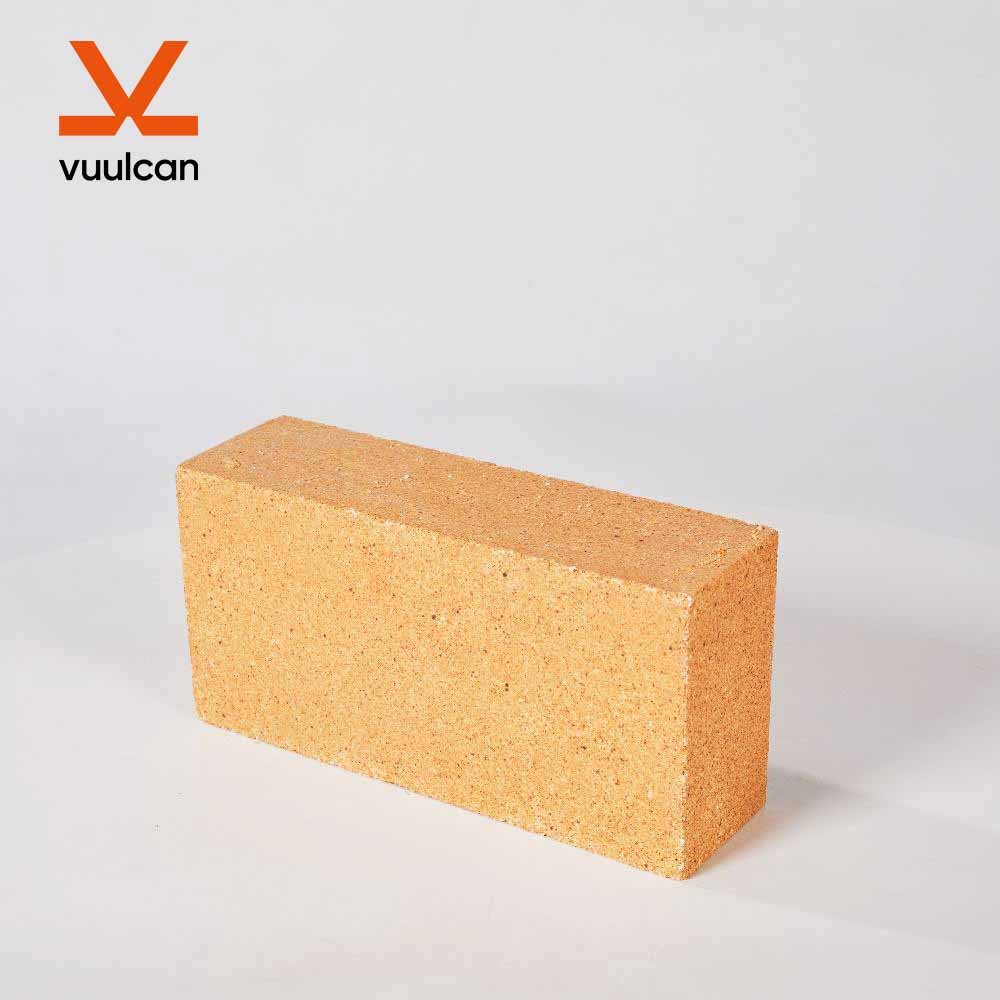
Fire clay bricks are characterized by high refractoriness, dense bulk density, low porosity, excellent high-temperature creep resistance, and good dimensional stability.
The Al₂O₃ content of fire clay bricks is generally 30%~40%, and the Fe₂O₃ content is less than 2.0%~2.5%. As weakly acidic refractory products, fire clay bricks can resist the erosion of acidic slag and acidic gases. They are made with well-homogenized materials as the main raw material, to which an appropriate amount of auxiliary materials and some additives are added. The production process involves fine grinding, mixing, and high-pressure forming, followed by firing at a suitable temperature. During this process, the material is converted into a mullite crystalline phase, resulting in the final product having a favorable mineral composition. This ensures that the product possesses high refractoriness, dense bulk density, low porosity, excellent high-temperature creep resistance, and good dimensional stability.
They are suitable for use in relevant parts of heating furnaces, soaking pits, heat treatment furnaces, blast furnaces, hot blast stoves, coke ovens, tunnel kilns, rotary kilns, and flues.
Technique Data of Refractory Clay Brick:
| Item | Specification | ||
| PN-42 | PN-40 | PN-35 | |
| Al2O3 % | ≥42 | ≥40 | ≥35 |
| Fe2O3 % | ≤2.0 | ≤2.0 | ≤2.5 |
| Apparent Porosity % | ≤20 | ≤24 | ≤26 |
| Bulk Density g/cm3 | 2.1~2.25 | 2.05~2.2 | 1.95~2.1 |
| CCS MPa | ≥45 | ≥35 | ≥30 |
| 0.2MPa RUL℃ | ≥1400 | ≥1350 | ≥1320 |
| PLC % | -0.4~0.11400℃×2h | -0.4~0.11350℃×2h | -0.4~0.11300℃×2h |
Coke oven: used for doors, roofs and flues (non-critical components); It has poor resistance to alkali residue, but it is cost-effective.
Heating furnace: bottom and walls of the medium and low-temperature zone (e.g., average heating section).
Annealing furnace: lining and checkerboard bricks.
Rotary kiln preheater: Lining of cyclone separator and decomposer (resistant to slag rich in SiO₂).
Cooler: Square bricks used in low-temperature areas that require high thermal shock resistance.
Regenerative chamber: Square bricks resistant to acidic high-temperature gases (need to be replaced regularly).
Melted part of the chest wall: Suitable for areas that do not come into direct contact with molten glass.
Tunnel kiln: Kiln car deck and wall lining (resistant to erosion by volatile components).
Shuttle kiln: Used for fireplaces and flues.