Address
304 North Cardinal St.
Dorchester Center, MA 02124
Work Hours
Monday to Friday: 7AM - 7PM
Weekend: 10AM - 5PM

Address
304 North Cardinal St.
Dorchester Center, MA 02124
Work Hours
Monday to Friday: 7AM - 7PM
Weekend: 10AM - 5PM
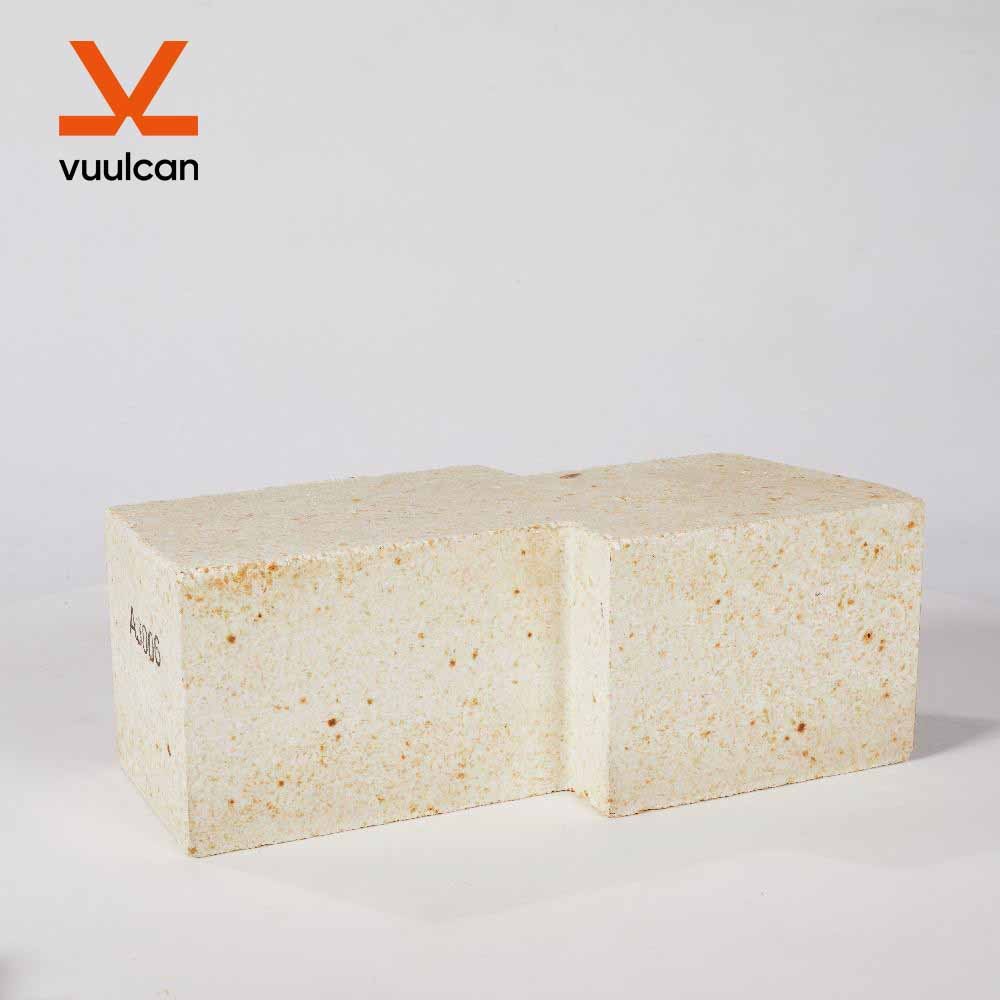
Sillimane-based products are made by adding a certain proportion of sillimanite, andalusite or kyanite and other trace elements to the raw materials of high alumina bricks. This addition enhances thermal shock resistance and significantly reduces high-temperature creep. These bricks are used as lining materials for the steel outlet channels of blast furnaces and the ladles of glass furnace steelmaking furnaces.
High refractoriness: The refractoriness of these bricks ranges from 1770°C to 1830°C, remaining stable in high-temperature environments and not easily melting or softening. They are suitable for the harsh conditions of glass furnaces, blast furnaces and other high-temperature industrial furnaces.
Excellent thermal shock stability: During the high-temperature mullitization process, silica nephrite exhibits minimal volume expansion and linear changes, ensuring dimensional stability. This enables the bricks to withstand rapid temperature changes without cracking or peeling, thereby providing excellent thermal shock resistance.
High load softening point: The load softening temperature range is from 1500°C to 1650°C, enabling the brick to maintain structural integrity under high-temperature loads. This feature ensures the stability of the kiln and extends its service life.
Strong corrosion resistance: These bricks can resist the corrosion of metallurgical slag and various glass melts, and can withstand high-temperature erosion and chemical erosion. This reduces wear and improves the operational efficiency and safety of the kiln.
Outstanding high-temperature resistance and wear resistance: In high-temperature environments, silica bricks maintain high surface hardness and wear resistance, withstand material friction and impact, while maintaining the integrity of the brick. They are very suitable for areas that are severely worn.
| Item | Specification | |
| Sillimanite Brick 65 | Sillimanite Brick 60 | |
| Al2O3 % | ≥65 | ≥60 |
| SiO2 % | ≤32 | ≤35 |
| Fe2O3 % | ≤0.5 | ≤1.0 |
| Apparent Porosity, % | ≤18 | ≤19 |
| Bulk Density g/cm3 | ≥2.5 | ≥2.4 |
| CCS, MPa | ≥80 | ≥80 |
| 0.2MPa RUL, ℃ | ≥1650 | ≥1600 |
| PLC, % 1400℃×2h | ±0.2 | |