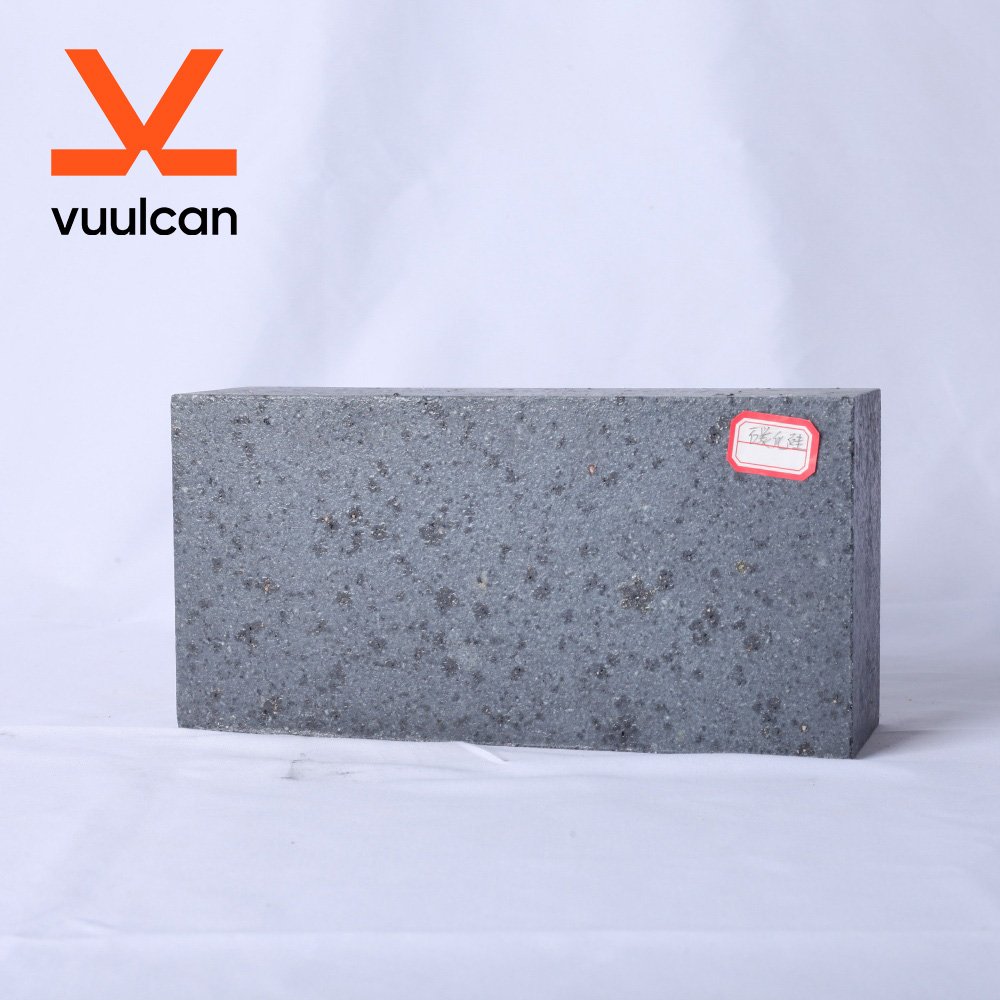
Silicon carbide bricks are refractory materials with silicon carbide as the main component. Relying on their excellent comprehensive properties, they occupy an important position in the high-temperature industrial field and have a wide range of applications. The following will elaborate on three aspects: performance characteristics, classification types and application scenarios.
I. Core Performance Characteristics
- Excellent High-Temperature Stability: The refractoriness can reach above 1700°C. It can stably maintain its own strength and structural integrity in high-temperature environments, and is not prone to deformation or damage.
- High Thermal Conductivity Efficiency: It has excellent thermal conductivity, which can quickly transfer heat in heat treatment and other related equipment, effectively improving the thermal efficiency of the equipment.
- Outstanding Wear Resistance: The Mohs hardness is about 9, with high hardness. It can effectively resist particle erosion and various mechanical wear, resulting in a longer service life.
- Strong Corrosion and Oxidation Resistance: It has extremely strong resistance to acidic and alkaline slags, various chemical gases and oxidizing environments, and is suitable for a wide range of environments.
- Good Thermal Shock Resistance: Due to the small thermal expansion coefficient and rapid thermal conductivity of silicon carbide itself, silicon carbide bricks can adapt to drastic temperature changes and still maintain stable performance in environments with large temperature fluctuations.
II. Main Classification Types
According to differences in production processes, composition ratios and target applications, silicon carbide bricks can be mainly divided into the following five categories, each of which is specifically adapted to different application scenarios:
- Ordinary Silicon Carbide Bricks: With silicon carbide as the main component, they have basic excellent thermal conductivity and high-temperature performance. The cost is relatively affordable, and they are widely used in general-grade high-temperature environments.
- Recrystallized Silicon Carbide Bricks: Made of binder-free silicon carbide raw materials through high-temperature sintering and recrystallization process, the products have low porosity, and their high-temperature performance is superior to that of ordinary types. They are suitable for scenarios with higher requirements for high-temperature stability.
- Silicon Nitride Bonded Silicon Carbide Bricks: Prepared by adding silicon nitride as a binder for sintering, which significantly improves the oxidation and corrosion resistance of the products. They are mainly used in key parts of furnace bodies with oxidizing atmospheres.
- Oxide Bonded Silicon Carbide Bricks: Improved production using oxide bonding technology, optimizing the mechanical properties and thermal shock resistance of the products, and can adapt to thermal environments with large temperature fluctuations and complex working conditions.
- Carbon Bonded Silicon Carbide Bricks: Carbon materials are selected as binders, which greatly improves the product’s ability to resist corrosion by alkaline slags, and is specially adapted to high-temperature operating environments with strong alkali erosion.
III. Wide Application Scenarios
Relying on its excellent physical and chemical properties, silicon carbide bricks are widely used in key equipment in multiple industrial fields, including:
- High-Temperature Kiln Industry: Used for the lining and supporting structures of kilns in metallurgy, ceramics, glass and other industries, which can effectively improve the service life and production efficiency of kiln equipment.
- Chemical Industry: Used as corrosion-resistant materials in harsh environments corroded by acid and alkaline media, and applied to core chemical equipment such as reaction furnaces and condensers.
- Steelmaking Industry: Suitable for key parts of steelmaking furnaces such as furnace mouths, furnace bottoms and tapping ports, and can effectively resist the erosion of slags and the loss of high-temperature environments during steelmaking.
- Energy Field: In the nuclear industry and thermal power plants, it is used to manufacture key radiation-resistant and high-temperature-resistant components, such as fuel element cladding materials and heat exchangers.
- Aerospace Field: Used to manufacture high-temperature components and thermal conductive elements of aerospace equipment, such as combustion chamber components and thermal insulation bricks.
- Environmental Protection Equipment Field: Used as high-temperature and corrosion-resistant lining materials in environmental protection equipment such as garbage incinerators and gasifiers to ensure the stable operation of the equipment.
In summary, silicon carbide bricks play an irreplaceable role in industrial production relying on their unique performance advantages. With the continuous development and innovation of relevant production technologies, their performance will be further improved, and their application scope will also be continuously expanded to provide support for more high-end industrial fields.